Resources
Will It Float?
Unstuck Monthly | October 2026
What a doomed warship teaches leaders about hearing hard truths.
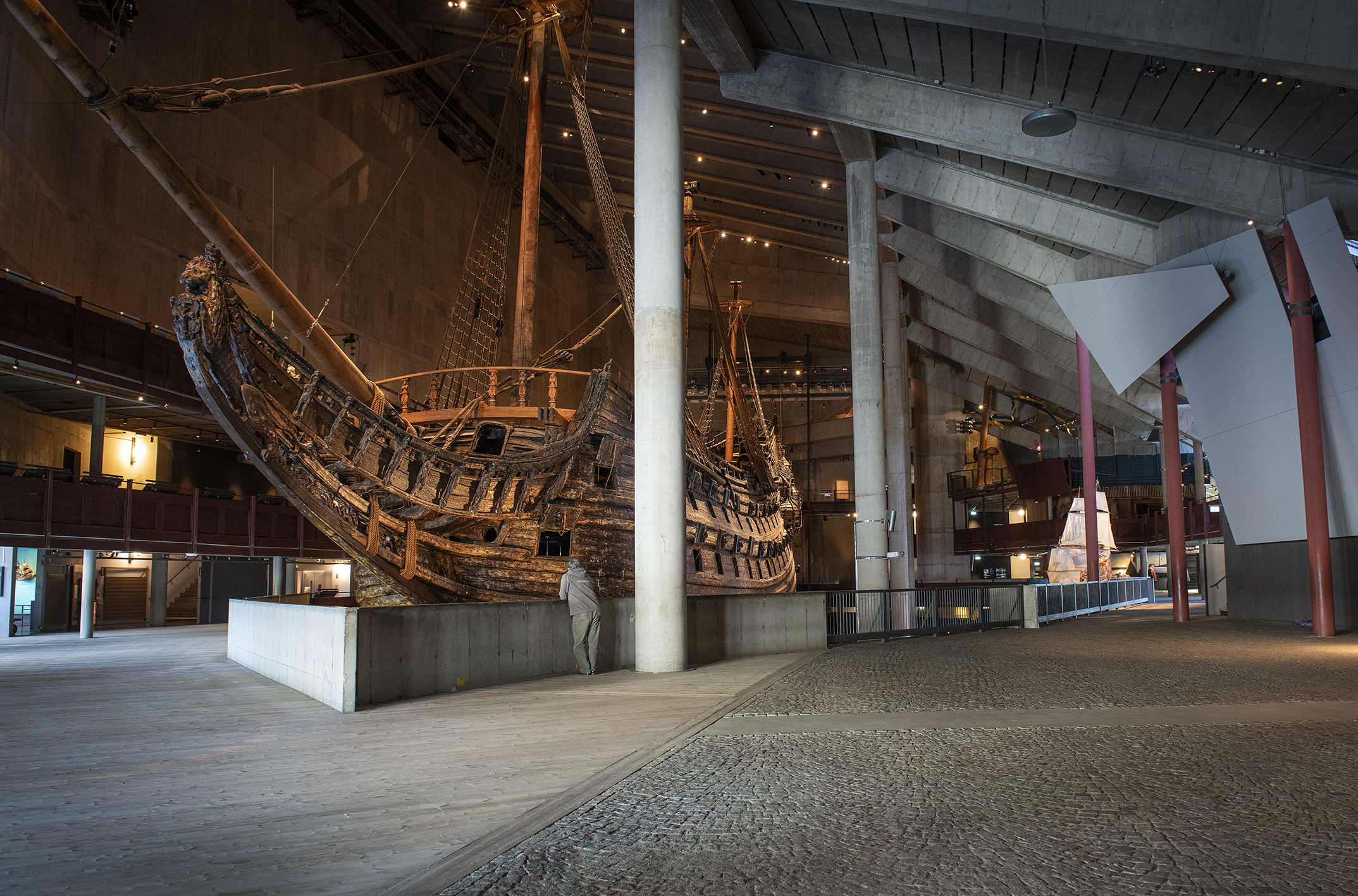
Sometime in the summer of 1628, thirty men gathered on the upper deck of the most heavily armed warship in the Baltic Sea and began running from one side to the other.
The ship was Vasa, tied up at the dock in Stockholm, and the running was a test arranged by her captain for a visiting admiral. The idea was to set her rolling and watch how she behaved. After three trips across the deck, Vice Admiral Klas Fleming called a halt to the test because he feared Vasa would capsize.
According to testimony given afterward, Fleming remarked that he wished the king were at home. The king was not at home. He was in Poland leading an army, and his letters pressed for one thing: his new flagship vessel at sea as soon as possible.
Vasa sailed that summer, and she sank in the harbor on her maiden voyage. How she came to sail, who knew what along the way, and what it tells us about leadership are the subject of this month’s newsletter. (Thank you to friends Brienne and Aaron for first sharing this story with me.)
A king in a hurry
Sweden in the 1620s was at war with Poland-Lithuania, and its navy was having a terrible decade. Between 1625 and 1627 it lost twelve ships to a storm and a battle. King Gustavus Adolphus, a keen student of artillery, saw an answer in ships built as floating gun platforms. Vasa was the first of them, with two full decks of heavy guns where earlier Swedish warships had carried one.
Five months after construction began, the king ordered seventy-two heavy cannons for Vasa, more than a single gun deck could hold, and approved the ship’s measurements himself. Vasa’s hull carried close to five hundred painted sculptures, most of them glorifying the king himself, including a lion three meters long at the bow. Nobody had a way to calculate what a ship like this would do in the water, because the mathematics of stability was more than a century away. Her builders and officers had experience and judgment to go on, and no numbers to show their king.
Three trips across the deck
Consider what the people on that deck had just seen during Fleming’s stability test: thirty men, three trips, and an admiral ending a test because he feared the ship would go over while still tied to the dock. Each of them could connect the dots that followed. The ship was the king’s project, built to measurements and armament he had approved, and everyone involved had been building what he asked for since 1626. Asking for a postponement meant telling the king, the man every one of them answered to, that his ship would not float, and he had been writing adamantly to say he wanted her at sea.
Accounts describe subordinates who did not feel able to raise the ship’s problems openly or ask for the maiden voyage to be postponed. Vasa sailed, and the result of Fleming’s test surfaced only at the official inquiry after she was on the bottom of the harbor. Even though the warning signs existed before Vasa’s maiden voyage, the people who knew did not use that information to stop it.
A calm day in August
On August 10 the day was calm, with only a light breeze from the southwest. Vasa was hauled along the waterfront to the south side of the harbor, four of her ten sails were set, and her lower gunports stood open with the guns run out to fire a salute as she left Stockholm. Hundreds, perhaps thousands, of ordinary Stockholmers had come to watch.
As she passed under the bluffs on the south side of the harbor, a gust filled her sails and heeled her hard to port. The crew let go the sheets and she slowly righted herself. At the next gap in the bluffs a stronger gust laid her over again, this time pushing the open lower gunports beneath the surface of the water, and sea rushed onto the gun deck and down into the hold. She sank to a depth of thirty-two meters, about 120 meters from shore, in full view of the crowd. Survivors clung to debris and to the masts still above the water, boats rushed out, and about thirty people are reported to have died.
Everyone's duty
The king’s council in Stockholm wrote to him the day after the sinking, and the letter took more than two weeks to reach him in Poland. His reply put the cause down to “imprudence and negligence” and demanded that the guilty be punished. Captain Hansson, who had survived, was taken for questioning immediately and swore that the guns had been secured and the crew was sober.
A full inquiry met at the Royal Palace on September 5, before members of the king’s council and the navy. As much as to learn why the ship had sunk, it sought someone to blame. Each surviving officer was questioned, along with the supervising shipwright and a number of experts. Crewmen and contractors formed two camps, each blaming the other, and everyone swore he had done his duty without fault.
The prosecutor asked Hein Jacobsson, the shipwright who had taken over the work, why he had built the ship so narrow and so badly that she capsized. Jacobsson answered that he had built her as the original shipwright, Master Henrik, directed, and that Henrik had followed a specification the king approved. Asked why the ship sank, the contractor Arendt de Groote said, “Only God knows.” No one was found guilty, and the blame fell, in effect, on Master Henrik, who was no longer alive to answer for it.
At the end of the inquiry, a panel of master shipwrights and senior naval officers was asked for opinions, and they explained the sinking plainly. One captain said she lacked enough “belly” to carry the weight above her. The cause fit in a sentence, and Fleming’s 30-man stability test, which pointed to the same cause, came to light only after she was on the bottom of the harbor.
What the king needed to hear
Vice Admiral Fleming saw the problem after three trips across the deck, and the ship was allowed to sail anyway. The people who knew about the alarming issues had good reason to believe the king did not want to hear them.
The king’s role deserves a hard look here. He demanded a result, a warship that could win his wars, and was involved enough in the details to approve Vasa’s measurements and armament himself. Yet he was also absent enough, in Poland and pressing by letter, that communication and decisions broke down between him and the people building the ship. A leader in that position owns every decision made under his name, including the ones he never heard about, and the people with the answers needed a way to give them to him.
Many of us lead the way the king did, albeit on a smaller scale. We push hard for a result, and people watch how we react to bad news: the disappointed sigh, the sharp-toned question, the quiet cooling toward whoever delivered it. When we as leaders have also waded into the weeds, a teammate saying that it’s “not ready yet” means telling us we were wrong. Few people volunteer to tell the truth to the one in power.
The skill that serves a leader here is simple to state: ask for the result, ask for the truth about it, and leave the method to the people who know what to do. The first keeps us accountable for what matters, and the third keeps us out of work we cannot do as well as others can. The second is the one that gets skipped, and it takes a question that makes bad news easy to deliver (and be received with grace and gratitude).
“Will it be ready?” can be answered “we’re on track” in complete sincerity while the ship fails the stability test at the dock, and everyone assumes ready means seaworthy, which leaves room for nobody to disappoint the king. “Will it float on launch day?” has two honest answers, yes or no, and either one requires taking a clear position it can back up with evidence.
A question like that lets a leader learn what they need to know without picking up a shipwright’s tools. The result belongs to the king, the method belongs to the shipwrights, and the question “Will it float on launch day?” connects the two.
An exercise for this month
Here is an exercise for this month:
Name one commitment where we have set the result and have heard only agreement.
Ask a question that makes bad news easy to bring, such as “what would have to be true for us to change course?” We ask it of the people closest to the work and then we stay quiet long enough for them to answer.
Hand back one decision about method that we have been steering, giving it to the person who knows the work better, along with the result we need.
Thank the first person who brings us bad news, and visibly act on it.
Acting on bad news in front of others takes nerve because it means changing course while others are watching and before we know whether it will pay off.
Before the plans harden
Vasa was raised from the harbor in 1961 after 333 years on the bottom, and more than forty-five million people have since walked past her. She has become a place where people go to see what happens when hard truths cannot reach the person in charge. Right now in Q4, FY2027 business plans are firming up for the year ahead, and the people closest to the work already have a hunch how they will hold up under real pressure. In September I asked us to repeat one trust move through the end of the year. This is a good place to use it: make it easy for our people to tell us what they know while there is still time to do something about it.
“Alex's insight, guidance, and ability to ask the right questions have helped me refine my personal and professional goals with clarity and purpose. He has a unique talent for challenging perspectives while providing support.”
— Ben, Chief Fellow, Hospital System
Nurturing a workplace culture to hear hard truths takes practice, and a thought partner helps us build the habits to do it. If your team came to mind as you read this, let’s talk about what it would take to build your desired culture.
Great conversations start with shared insights. My coaching practice, like this newsletter, thrives on connections. If you know someone who's navigating their own sticking points, I’d love for you to share this with them.