Resources
Speed of Trust
Unstuck Monthly | July 2026
Trust doesn’t arrive on its own. Someone has to go first.
On one of our last calls, a chief executive I’ve worked with was describing a program she wanted to build, one where her most experienced people would open their doors and let others watch them work up close before anything was polished or proven.
She stopped herself partway through. “We can only move at the speed of trust,” she said. “People are going to need to be vulnerable to do it.”
She’d borrowed the phrase from the title of Stephen M.R. Covey’s book, and she’d made it concrete because she was watching what trust costs in the room, in real time.
Trust sets the speed of everything a team does. When it runs high, people move, decisions land, and work flows. When it runs low, it works like a tax on every exchange, adding friction to each handoff, forcing each message to be read twice for hidden meanings, quietly re-litigating each decision. The tax is invisible and constant, and most teams pay it every day without acknowledging the drag.
Trust, like most leadership qualities I work on with my clients, is a skill you can build – learnable and repeatable, available to anyone willing to spend time on it.
To build it, someone extends trust before there is any proof it will be returned, opening the door first without a guarantee that anyone will walk through it. The chief executive’s people did not wait to feel safe and then agree to be observed. Taking the risk to be observed was how the trust got built in the first place. That opening move, made without cover, is the whole practice, and it takes nerve.
What I heard at my father’s funeral
My father died earlier this month. It was from him that I learned many of my earliest and most valued leadership lessons. Before heading to college, he gifted me his personal, yellowed copy of Dale Carnegie’s “How to Win Friends and Influence People”. As I sat with him through rehab and hospice and then with his memory through the funeral and shiva, I’ve been pondering the lessons he passed down.
As friends and family came to honor his memory, person after person told a version of the same story. He would ask how you were, and you would give the polite, socially conscious answer we all give, that you were fine, good, busy. Then he would wait a beat and ask the real question. "How are you, really?"
That second question carries real nerve. It invites an answer you might not have time for, one that might ask something of you in return. Most of us skip it for exactly that reason. Dad asked it anyway, for decades, of almost everyone he met. He simply made the first move, again and again, until the people around him understood without being told that he could be trusted with the real answer.
Dad modeled how one builds trust in our community and how that trust compounds over time. Someone goes first. Someone reaches toward another person and opens themselves to hold space for the candid truth. The move is small, and the intention behind it is real.
Why we wait
When I listen to clients and former colleagues talk about trust, I often hear it described as something that arrives on its own, as though we could put in the years, keep our nose clean, and one day find it waiting for us. This version of trust arrives through passiveness.
Waiting for trust to accumulate strikes me as naive and counterproductive. The best leaders that I know run the other way. They extend trust first, ask the real questions first, and hand over the work before they are sure it has been earned, and they do it knowing the gesture might backfire. That acceptance of risk separates a bold first move from wishful thinking.
A while back, in “The Harder Play,” I wrote that a team will follow a manager into the hard moments because they have already watched him advocate for them in the easier ones. The trust was ready when it mattered because he had extended it earlier, first, before the stakes climbed. The leaders who have it when they need it are the ones who went first to build trust when the need for it wasn’t obvious.
The move this week
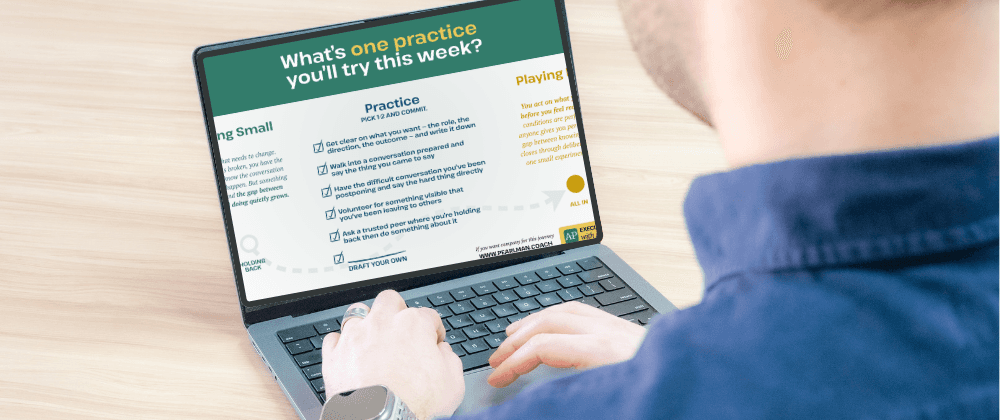
Choose one relationship where you have been waiting for trust to arrive. Then make the first move. Ask the second question and stay for the answer. Say the honest thing you have been holding back. Hand over the work before you are fully certain they have earned it.
You will not feel ready, and that discomfort is the surest sign the move counts. This is nerve doing its quiet work, the small and bold action you take before you can be sure how it will land.
Sit with these reflection questions as you decide which bold move to make:
Where are you waiting to be trusted before you will risk being the first to extend it?
What is the “how are you, really?” you could ask this week, the question you usually skip because you are not sure you want the real answer?
Whose trust have you already earned, quietly, through small first moves you never stopped to count?
One last thing
My father was a very successful executive in real estate investment banking, and he was also a very active leader formally and informally in our community. Throughout his professional upbringing, he understood the critical actions required to build trust better than most leaders I have met. He knew that trust is built by the person willing to go first and hold space, and that going first is rarely convenient and almost always worth it.
That is the whole invitation this season. Somewhere there is a person you lead, or work beside, or love, who is quietly waiting to see whether you will make the first move. You already have the judgment to know it matters. What is left is the nerve to go first.
“Alex is a supportive coach who listens deeply, asks thought-provoking questions that require true reflection, and provides concrete tools to move you forward.”
— Katharine, School Network Leader
Building trust is quiet, deliberate work, and a thought partner helps you find the first move and stay honest about how it lands. If you need support leading your team, let’s talk about how to build, evaluate, and leverage trusting relationships to deliver results.
Great conversations start with shared insights. My coaching practice, like this newsletter, thrives on connections. If you know someone who's navigating their own sticking points, I’d love for you to share this with them.