Resources
20 meters down, asking "Why am I here?"
Unstuck Monthly | June 2025
What shark diving taught me about leadership decisions.
Hi, Friend!
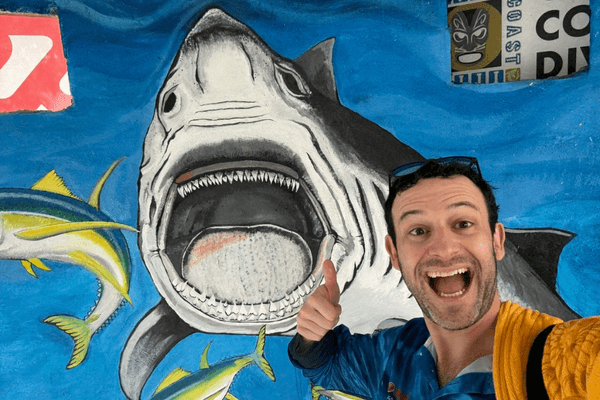
Last week I found myself 20 meters underwater, surrounded by sharks, asking “Why am I here?”
The decision to go shark diving had been completely calculated. My brother and his partner are master divers, the dive company had excellent safety protocols, and I’d received a thorough safety briefing.
But as I floated there, watching these massive creatures circle the viewing area, my brain started working overtime. What if something went wrong? What if I panicked and put everyone at risk? Why had I thought this was a good idea?
The strangest part? When I first entered the water, I felt perfectly calm. The sharks looked exactly like what they were: fish going about their business, completely uninterested in us. But the longer I stayed down there, the more my mind conjured up scenarios that had nothing to do with reality.
I had to keep reminding myself to breathe steadily and stay present. This wasn’t reckless courage. I hadn’t jumped off a boat on a whim. Every precaution had been taken. I was with people I trusted completely.
The Leadership Moment
A few months ago, I was working with a client I’ll call Carol who found herself in a remarkably similar situation, just without the sharks.
Carol had taken on leading her company’s innovation portfolio during a particularly challenging year. She was responsible for managing a dozen pilot programs and making tough decisions about which ones deserved continued investment.
The decision to accept this responsibility had been strategic. Carol had the right experience, strong relationships across the organization, and a clear understanding of what the role demanded.
But halfway through the year, she hit her own “underwater moment.”
Carol was about to meet with several innovation teams to deliver potentially devastating news about budget cuts. Some of their projects might not survive. As someone who naturally avoids conflict, she found herself questioning everything.
“I keep thinking, why did I take this on?” she told me during one of our sessions. “I know these decisions are necessary, but I’m the one who has to look people in the eye and tell them their work might be eliminated. What if I’m wrong about which projects to cut?”
The weight of knowing that her decisions could affect people’s livelihoods was creating exactly the kind of second-guessing I felt underwater.
Calculated Risk vs. Reckless Courage
When the pressure hit, Carol's brain started questioning everything – the same confusion between calculated risk and reckless doubt that I felt underwater.
Reckless courage says, “I’ll figure it out as I go.”
Calculated risk says, “I’ve prepared for this, and I have support systems in place.”
What I realized underwater, and what Carol discovered in her leadership role, is that questioning ourselves doesn’t invalidate the decision. Smart people naturally assess risk and consider alternatives. The challenge is learning to distinguish between appropriate caution and paralyzing self-doubt.
For me, the answer was remembering my preparation: the safety briefing, my brother’s expertise, the controlled environment. For Carol, it meant developing what she called her “non-negotiables” framework.
“I realized I needed to create clear criteria that took the emotion out of these decisions,” she explained. “So I developed what I called my ‘non-negotiables’ – three specific metrics every project had to meet to continue. It wasn’t about whether I liked delivering bad news, it was about whether the projects met our sustainability requirements.”
Carol learned to separate her emotional reaction to difficult conversations from the strategic necessity of making tough decisions. She wasn’t being harsh; she was being responsible.
Three Elements of Calculated Leadership Risk
Looking back at both experiences, I notice three elements that separate calculated risks from reckless ones:
Trusted Foundation: We need reliable support systems. Carol leaned on her experience and the company's innovation methodology. I trusted my brother’s diving expertise.
Clear Preparation: Both situations required specific protocols. Carol developed her non-negotiables to guide difficult decisions. I relied on the safety briefing to manage underwater challenges.
Present-Moment Management: When fear kicks in, we need tools to stay grounded. For me, it was focusing on my breathing. For Carol, it was distinguishing between her discomfort and the actual requirements of leadership.
The question isn’t whether we should have made the decision. It’s how we trust our preparation while managing the natural fear that comes with high-stakes leadership.
The View From 20 Meters Down
The sharks, by the way, were magnificent. And Carol successfully guided her innovation portfolio through one of the company's most challenging years, helping teams align their passion with organizational sustainability.
Both of us learned something valuable: calculated risks feel scary in the moment precisely because they matter. When we’ve done our homework, gathered trusted advisors, and prepared thoroughly, that queasy feeling in our stomachs isn’t a warning sign – it’s confirmation that we’re doing something that counts.
The next time we find ourselves asking “Why am I here?” in the middle of a challenging situation we chose to enter, remember to check our foundation, trust our preparation, and breathe.
Thank you for sticking with me!
Until next time,
Alex
P.S. If this resonated with you, I’d love for you to forward it to someone who might be facing their own “underwater moment” this quarter.
Your Q3 Leadership Check
If you're navigating your own high-stakes leadership challenges and want a thought partner to distinguish between smart caution and limiting fear, I have spots available for Q3 leadership check conversations.
Book a Consultation (or let's just talk about sharks!)
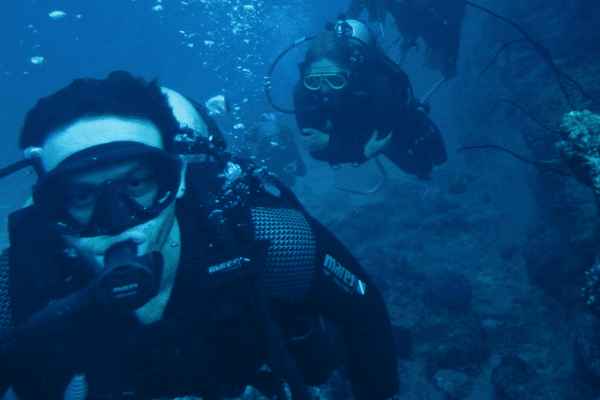
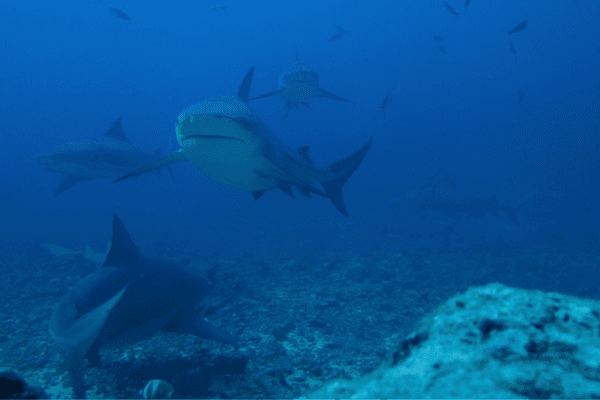
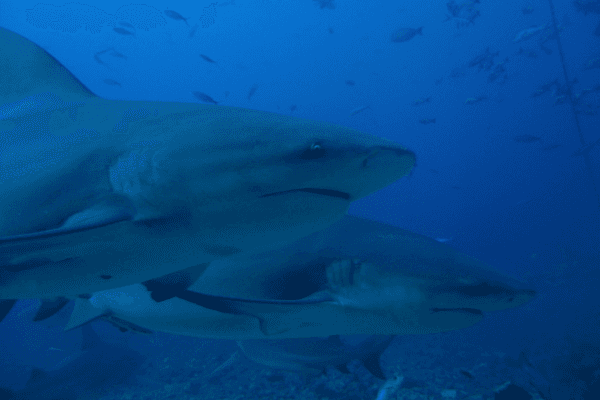
Underwater photos by Bryan Becker
Great conversations start with shared insights. My coaching practice, like this newsletter, thrives on connections – if you know someone who's navigating their own sticking points, I'd love for you to share this with them.